# Give Your Business an AI Exception Radar
Most teams do not need AI to replace people. They need AI to stop people from babysitting systems.
That distinction matters.
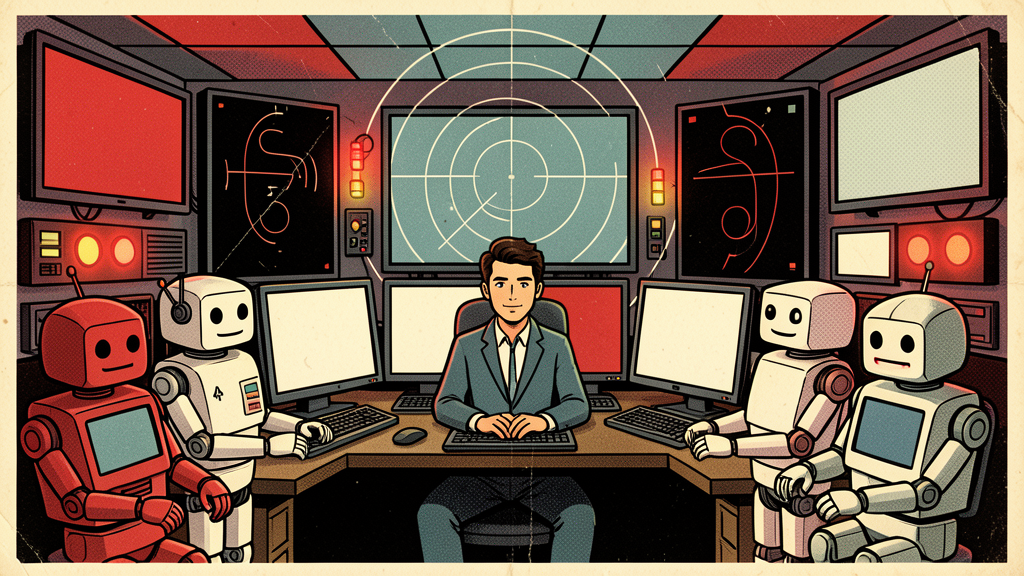
A practical AI exception radar monitors routine activity and flags the few things that deserve human attention. It does not pretend to be the boss. It acts like a disciplined watch officer: scanning the board, spotting unusual movement, and calling out what matters.
## What is an exception radar?
An exception radar is an AI-assisted workflow that watches defined business signals and alerts the right person when something looks wrong, risky, delayed, inconsistent, or unusually important.
Examples:
– A high-value lead has not been contacted in 24 hours.
– A support ticket mentions cancellation, refund, legal, angry, or urgent language.
– A customer submits the same issue three times.
– A donation, invoice, renewal, or membership payment fails.
– A project task is overdue and blocks a launch.
– A vendor response contradicts the contract or prior commitment.
– A form submission includes a request that should bypass the normal queue.
The agent is not doing everything. It is watching for the moments where attention matters.
## Why this works
Humans are bad at monitoring dashboards all day. We get tired. We miss patterns. We normalize red flags. We also waste time checking things that are perfectly fine.
AI is useful here because it can scan boring inputs consistently and summarize context quickly.
That makes the human role better, not smaller. People spend less time hunting and more time deciding.
## Build the first radar around one workflow
Do not start with the whole business. Start with one lane where missed exceptions cost time, money, trust, or momentum.
Good first candidates:
– sales leads
– support tickets
– membership renewals
– event registrations
– onboarding tasks
– executive inbox triage
– project launch checklists
Define what “normal” looks like. Then define what should trigger a flag.
## The trigger library
Create a simple list of exception triggers. For example:
– overdue by more than 24 hours
– negative sentiment or escalation language
– VIP, sponsor, board member, major customer, or donor mentioned
– duplicate issue from the same person
– missing required field
– dollar amount above threshold
– no owner assigned
– due date changed more than twice
– task blocked by external dependency
You can start with rules, then use the LLM to classify language and summarize context.
## What the alert should include
A good AI alert should not just say “something happened.” It should prepare the human to act.
Use this format:
– **Issue:** what triggered the alert
– **Why it matters:** business risk or opportunity
– **Source:** link to the ticket, CRM record, email, or task
– **Suggested owner:** who should review it
– **Recommended next action:** draft response, call, escalate, update record, or ignore
– **Confidence level:** high, medium, or low
This keeps the system practical and auditable.
## Where agents help most
Agents are especially useful when they can move across systems. For example, an agent might see a support ticket, check the customer record, review recent emails, summarize the history, and prepare a recommended response.
That is real leverage.
The agent does the context gathering. The human makes the judgment call.
## Keep the guardrails tight
Your first version should alert, summarize, and draft. Be careful with agents that automatically send messages, issue refunds, change customer status, or modify financial records.
Automation should earn authority in stages:
1. observe
2. summarize
3. recommend
4. draft
5. act with approval
6. act automatically only in low-risk cases
That progression keeps you out of trouble.
## The practical payoff
An exception radar reduces the operational tax of “checking everything.” It helps teams respond faster, protect relationships, and catch risk earlier.
It also gives leaders a better view of the business. Instead of asking, “Is anyone watching this?” the answer becomes, “Yes, and the right person will know when it matters.”
That is the kind of AI worth building.
Ralph Perez’s book *Fear Less, Live More* includes other practical ways to use AI with more clarity, confidence, and momentum.
Learn more here: https://www.amazon.com/Fear-Less-Live-More-Practical/dp/B0GGBWHFN2/
Keep building practical AI confidence
Fear Less, Live More
Ralph Perez’s book includes additional practical ways to use AI with more clarity, confidence, and momentum.